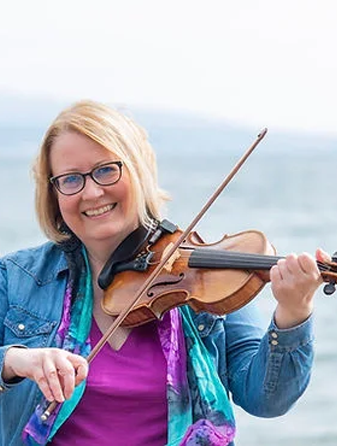
There are moments in life that shape who we become, and for me, those moments began at the Gaelic College in St. Ann’s, Cape Breton, in the early 1990s. I attended three consecutive two-week summer sessions, not knowing that these experiences would spark a lifelong love for the piano and Cape Breton music traditions.
Discovering Inspiration
At the time, I greatly admired Tracey Dares, who often performed alongside fiddler Natalie MacMaster. I’ll never forget one Monday evening staff concert where Tracey played Lew Alpaugh’s Morning and Jerry Holland’s My Cape Breton Home. Something shifted in me that night—I was hooked.
From then on, my days were filled with four piano classes, learning, practicing, and soaking up every bit of the music. We only had upright pianos back then, often two or three students sharing one instrument, but that never dimmed the joy of playing. I still remember learning to chord along to Dan R. MacDonald’s Lime Hill strathspey, John Morris Rankin’s Jack Daniel’s reel, and lively jigs like Boys of the Town and Belfast Linen. It was my first true step into the heart of Cape Breton music.
A Trophy and a Turning Point
During one session, I was awarded the “Most Improved Piano Student” trophy. It may sound simple, but to me, it meant the world. It was a tangible reminder that I was on the right path. Tracey’s encouraging words on my report card—that I had “so much potential”—fueled me to keep going.
The Washabuck Connection
Music wasn’t just something I learned—it became something I shared. Alongside my sister Jill, cousin Martia, and friend Bhreagh, we formed The Washabuck Connection. For several years, we performed step-dancing shows and fiddle-piano sets throughout Cape Breton. These experiences gave us more than just confidence on stage; they taught us lessons about performance, choreography, and building repertoire that would stay with us long after the group disbanded.
Lessons from My Grandfather
Perhaps the most influential figure in my journey was my grandfather, Michael Anthony MacLean, a respected community fiddler. Living next door to him meant endless opportunities to play music together. He played strictly by ear, with a style uniquely his own, and he welcomed me as his accompanist.
Grampie was more than just a fiddler—he was a teacher, a storyteller, and a guardian of tradition. He often reminded me:
- Don’t overplay the piano—the fiddle is the feature.
- Keep good timing—the piano anchors the melody.
- Play softly—support, don’t overpower.
Even his sister, fiddler Theresa Morrison, would chime in, encouraging me with advice like “You’ll be good yet!” or gentle critiques when I was a little too “shifty” on the keys. Those words were never discouragement; they were a sign that they believed in me and wanted me to carry the tradition forward with authenticity and care.
Carrying the Tradition Forward
From the Gaelic College to community halls, from my mentors to my family, I learned that this music is more than just notes and rhythms. It’s a living tradition, passed down with pride, respect, and love. Today, as both a performer and teacher, I carry those lessons with me—always mindful of the roots from which they grew.
Cape Breton music is about connection: to history, to family, and to community. And for me, it all started with a few upright pianos, some encouraging words, and the joy of playing beside my grandfather.